Home > Hagiyaki

Aohagi Dokai tokkuri by Noutomi Susumu SOLD

Aohagi guinomi by Noutomi Susumu

Aohagi guinomi by Noutomi Susumu

Aohagi guinomi by Noutomi Susumu SOLD

Aohagi yunomi by Noutomi Susumu

Aohagi yunomi by Noutomi Susumu SOLD

Aohagi yunomi by Noutomi Susumu

Aohagi Wan by Noutomi Susumu 490 ml /14.8 fl. oz SOLD

Aohagi Wan by Noutomi Susumu 410 ml /13.8 fl. oz SOLD

Aohagi Wan by Noutomi Susumu 380 ml /12.8 fl. oz SOLD

Aohagi teapot / Noutomi Susumu 330 ml / 11.1 fl.oz

Aohagi teapot / Noutomi Susumu 360 ml / 12.1 fl.oz

Aohagi teapot / Noutomi Susumu 460 ml / 15.5 fl.oz SOLD

Aohagi teapot / Noutomi Susumu 340 ml / 11.4 fl. oz SOLD

Aohagi houhin / Noutomi Susumu 205 ml / 6.9 fl.oz

Aohagi houhin / Noutomi Susumu 225 ml / 7.6 fl.oz SOLD

Aohagi houhin / Noutomi Susumu 180 ml / 6 fl.oz SOLD

Aohagi houhin / Noutomi Susumu 200 ml / 6.7 fl.oz SOLD

Aohagi rock cup / Noutomi Susumu 300-315 ml / 10.1-10.6 fl.oz

Aohagi katakuchi from Choun kiln

Aohagi katakuchi / Noutomi Naoko 290, 330 ml / 9.8, 11.1 fl.oz SOLD

Aohagi houhin / Noutomi Naoko 240 ml / 8.1 fl.oz

Aohagi houhin / Noutomi Naoko 240 ml / 8.1 fl.oz

Aohagi tea bowl / Noutomi Naoko 310 ml/ 10.4 fl.oz

Aohagi teapot / Noutomi Naoko 310 ml / 10.4 fl.oz

Aohagi teapot / Noutomi Naoko 280 ml / 9.4 fl.oz SOLD

Aohagi carved tea bowl / Noutomi Naoko 165-240 ml/ 5.5-8.1 fl.oz SOLD

Onihagi houhin set by Kuroda Gaku SOLD

Biwa Kofukuwan tea bowl 365 ml / 12.3 fl.oz SOLD

Biwa Kofukuwan tea bowl 360 ml / 12.1 fl.oz SOLD

Blue glaze yunomi by Mukuhara Kashun 285 ml / 9.6 fl oz

Blue glaze yunomi by Mukuhara Kashun 230 ml / 7.7 fl oz

Blue glaze yunomi by Mukuhara Kashun 230 ml / 7.7 fl oz

Blue glaze teapot by Mukuhara Kashun 355 ml / 12 fl.oz SOLD

Blue glaze teapot by Mukuhara Kashun 350 ml / 11.8 fl.oz SOLD

Biwa (Loquat) yunomi by Mukuhara Kashun 275 ml / 9.2 fl.oz SOLD

Biwa (Loquat) yunomi by Mukuhara Kashun 245 ml / 8.2 fl.oz SOLD
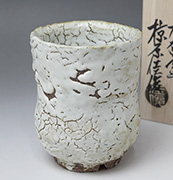
White hagi yunomi by Mukuhara Kashun 240 ml / 8.1 fl.oz

White hagi yunomi by Mukuhara Kashun 265 ml / 8.9 fl.oz SOLD

Biwa (Loquat) guinomi by Mukuhara Kashun 85 ml / 2.8 fl.oz NEW

Biwa (Loquat) guinomi by Mukuhara Kashun 100 ml / 3.3 fl.oz NEW

White hagi guinomi by Mukuhara Kashun 100 ml / 3.3 fl.oz NEW

White hagi guinomi by Mukuhara Kashun 80 ml / 2.7 fl.oz NEW
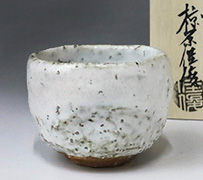
White hagi guinomi by Mukuhara Kashun 80 ml / 2.7 fl.oz

Blue glazed guinomi by Mukuhara Kashun 65 ml / 2.1 fl.oz

Blue glazed guinomi by Mukuhara Kashun 80 ml / 2.7 fl.oz

Blue glazed guinomi by Mukuhara Kashun 80 ml / 2.7 fl.oz

Blue glazed guinomi by Mukuhara Kashun 70 ml / 2.3 fl.oz
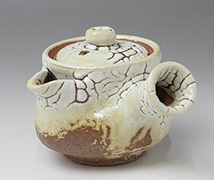
Kairagi teapot by Mukuhara Kashun (small) 110 ml / 3.7 fl.oz SOLD

Kairagi teapot by Mukuhara Kashun (small) 115 ml / 3.8 fl.oz NEW

Kairagi houhin by Mukuhara Kashun
110 ml / 3.7 fl.oz NEW

Kairagi houhin by Mukuhara Kashun
130 ml / 4.3 fl.oz SOLD

Kairagi houhin by Mukuhara Kashun
110 ml / 3.7 fl.oz SOLD
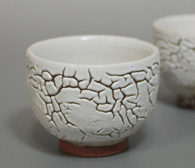
Kairagi sencha cup (small) by Mukuhara Kashun
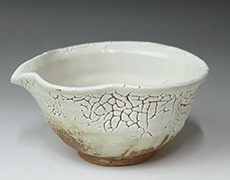
Kairagi yuzamashi by Mukuhara Kashun
285 - 315 ml / 9.6 - 10.6 fl.oz SOLD
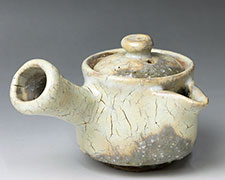
Tsuchinohana teapot by Mukuhara Kashun (small) 100 ml / 3.3 fl.oz *Left-handed
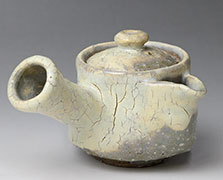
Tsuchinohana teapot by Mukuhara Kashun (small) 100 ml / 3.3 fl.oz *Left-handed
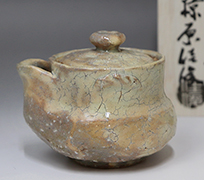
Tsuchinohana houhin by Mukuhara Kashun 120 ml / 4 fl.oz
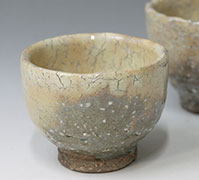
Tsuchinohana sencha cup by Mukuhara Kashun
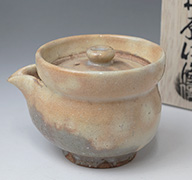
Gohonte houhin by Mukuhara Kashun 80 ml / 2.7 fl.oz

Kairagi teapot by Mukuhara Kashun 375 ml / 12.6 fl.oz

Kairagi teapot by Mukuhara Kashun 380 ml / 12.8 fl.oz

Kairagi teapot by Mukuhara Kashun 270 ml / 9.1 fl.oz NEW

Kairagi teapot by Mukuhara Kashun 380 ml / 12.8 fl.oz SOLD

Ash glaze textured yunomi (Large) by Mukuhara Kashun 420, 430 ml / 14.2, 14.5 fl.oz/ 12.8 fl.oz
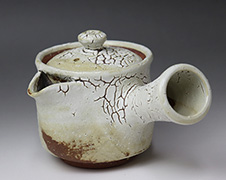
Kairagi teapot by Mukuhara Kashun 340 ml /11.4 fl.oz
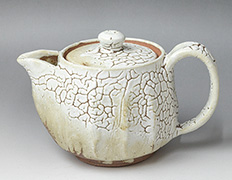
Kairagi teapot by Mukuhara Kashun 360 ml /12.1 fl.oz
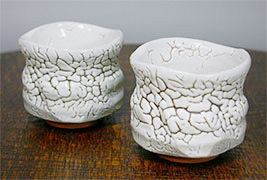
Kairagi rugged yunomi by Mukuhara Kashun
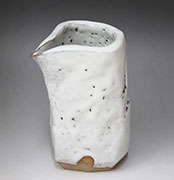
White hagi Mentori katakuchi by Ohtani Masahiko
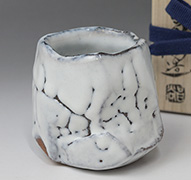
Kurinuki guinomi by Kaneta Masanao
105 ml / 3.5 fl.oz

Kurinuki yunomi by Kaneta Masanao
220 ml / 7.4 fl. oz

White Hagi tea bowl by Suizu Kazuyuki
330- 355 ml / 11.1- 12 fl.oz
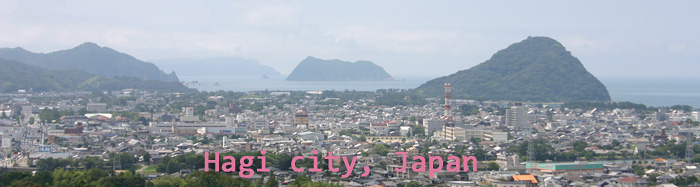
Hagi yaki is made of very porous clay. As the items are used, tea deposits seep into the glaze,changing the color. Fans of Hagi yaki view this as a charming characteristic rather than a detraction. One gets the feeling that the items are adapting themselves to the owner's usage and that in time, each piece becomes even more unique and special.
When you first start using Hagi yaki, you may notice an earthy smell. This comes from the clay and will disappear with use, as tea deposits are absorbed into the glaze.
Because of the porous nature of the clay, the use of strong detergent is not recommended. Wash in hot water and dry with a soft cloth. Leave to dry naturally in a shady place before storing. Do not leave fluids standing in the items for any length of time as condensation may gather around the base and damage wooden counters or trays. Also, as the base tends to be rough, be careful when using on polished surfaces.