Home Oribe & Shino
Pottery has been produced in the Mino area of Gifu prefecture since the Kamakura period (the end of the 12th century). The main names synonymous with Mino are
Oribe, Shino and Kizeto.
Oribe yaki is one of the many wares produced in the prolific pottery producing areas around
Seto,Aichi prefecture and Tajimi, Gifu prefecture. Easily recognisable by its distinctive
green glaze, Oribe yaki has four main types; E-Oribe (patterns done with iron underglaze),
Kuro-Oribe (an almost black, dark green glaze),Ao-oribe ( light green glaze) and
Aka-Oribe (incised patterns covered with various glazes).
Originally favored by the tea masters of the Momoyama period (in the late 16th century),
one of whom, Furuta Oribe, is said to have lent his name to the pottery.
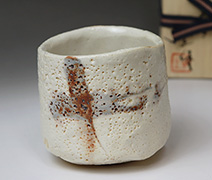
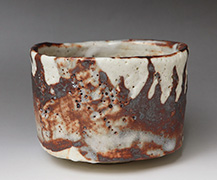
Shino is known for its milky white glaze. It is said to be the first ware to decorate its pieces with brush-drawn designs.
Shino may appear at first to be simple and rustic. However a closer look reveals nuances and depth which can only come about through a long, hard creative process.
The complexity of texture and depth of color is achieved through years of research and practical experience, making high-quality Shino respected and sought after by conoisseurs.
The term Ki-seto(Kizeto) covers a broad area. As it's name implies (ki=yellow, seto=porcelain), Kizeto ware has a subtle earthy yellow tinge, sometimes accented with tints of green.
We can find quality tea ceremony ware as well as more accessible everyday items in the Oribe, Shino and Kizeto patterns.
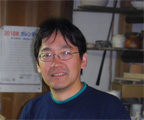 Mr Higuchi Masayuki |
||
 Yunomi |
 Yunomi |
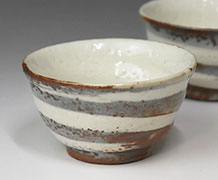 sencha cup |
 Yunomi |
 Yunomi |
 Yunomi SOLD |
 Yunomi SOLD |
 Sake cup |
 Sake cup |
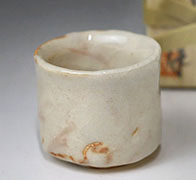 Sake cup (small) |
|
|
|
||
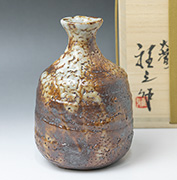
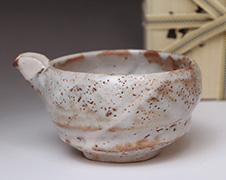 Katakuchi sake pitcher SOLD |
 Katakuchi sake pitcher |
 Katakuchi sake pitcher |
 Tea bowl NEW |
 Tea bowl NEW |
|
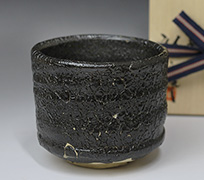 Tea bowl |
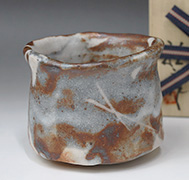 Tea bowl |
|
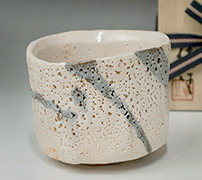 Tea bowl SOLD |
 Tea bowl SOLD |
 Matcha Tea bowl SOLD |
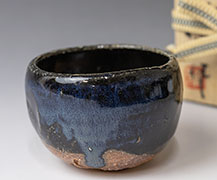
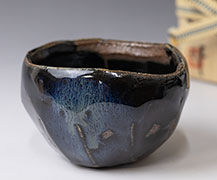
Kuro Oribe ware uses iron glaze to achieve the beautiful finish. The blue color appears when natural ash melts on the iron glaze in a wood-fired kiln. |
 Sake cup SOLD |
 Sake cup |
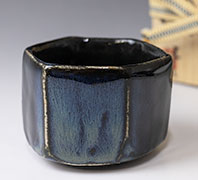 Sake cup |
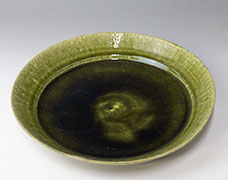 Oribe dish SOLD |
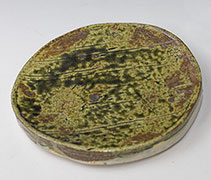 Oribe plate |
|
| Others | 
Oribe kyusu by Oguri Daikou |

Kohiki teapot by Akane Shinji |
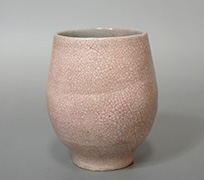 Red crazing yunomi /Zohogama |
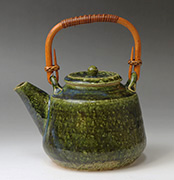 Oribe Dobin style teapot /Zohogama SOLD |

Kohiki Dobin style teapot by Akane Shinji |
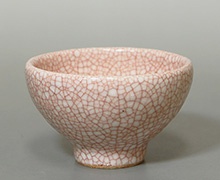 Red crazing sake cup/Zohogama |
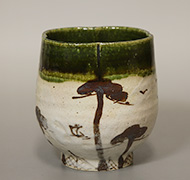 Oribe foliated rim yunomi (Large) |
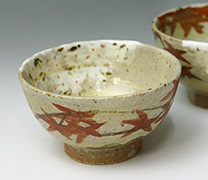 Unkinsencha sencha cup /Zohogama |
 Yashichida Tsubaki (Camellia)/Zohogama |
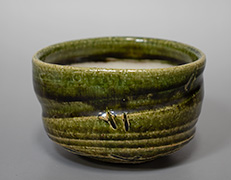 Oribe Kofukuwan / Zohogama SOLD |
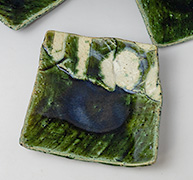 Oribe plate with Circle & Stripe motifs/Yamamoto Kazuhito NEW |