Handmade Tokoname Kyusu Teapots from Japan
Artistic Nippon has specialized in handmade Japanese ceramics and teaware for more than 25 years online with a strong focus on Tokoname kyusu teapots. Most of the Tokoname pieces we offer are handmade, individually selected, and shipped directly from our shop in Japan.
This page is a guide for customers who would like to understand what makes Tokoname kyusu special, how to choose a teapot for Japanese green tea, and where to find our current selection of available Tokoname teapots.

Handmade Tokoname kyusu teapots selected by Artistic Nippon.
Looking for available pieces?
Please visit our current selection of handmade Tokoname kyusu teapots:
Why Tokoname Kyusu Are Special
Tokoname, located in Aichi Prefecture, is one of Japan's most important ceramic regions and is especially renowned for kyusu teapots. A Tokoname kyusu is valued not only as a vessel for brewing tea, but also as a highly functional handmade tool designed for balance, pouring comfort, and enhancing the taste of Japanese green tea.
A well-made kyusu should feel comfortable in the hand, pour smoothly, and allow the tea leaves to open properly. Details such as body shape, spout angle, lid fit, handle position, and strainer design all affect the experience of brewing and serving tea.
At Artistic Nippon, we focus mainly on handmade Tokoname kyusu teapots by named Japanese potters. Many pieces are one-of-a-kind or produced in small numbers, and the appearance, firing, clay and capacity may vary from piece to piece.
Tokoname Clay and Japanese Green Tea
Tokoname is particularly associated with iron-rich clay, including the well-known red shudei clay used for many traditional Japanese teapots. Unglazed Tokoname clay is appreciated by many green tea drinkers for the natural, mellow chracter it can bring to sencha, gyokuro, hojicha, and other Japanese teas.
Tokoname kyusu are made in many styles, from classic red shudei teapots to yakishime, mogake, wood-fired pieces, and more contemporary forms. The right choice depends on the tea you drink, your preferred capacity, and whether you are looking for a practical daily teapot or a collector's piece.
Ceramic Filters Used in Tokoname Kyusu
One of the defining features of many Tokoname kyusu teapots is the use of ceramic filters. Common styles include sasame filters, built-in ceramic mesh filters, and direct-hole designs. Each has a different character and is suited to different tea leaves and brewing preferences.
Sasame ceramic filters
A sasame filter is a popular ceramic filter made by punching small holes in the clay disc and attaching it inside the teapot.
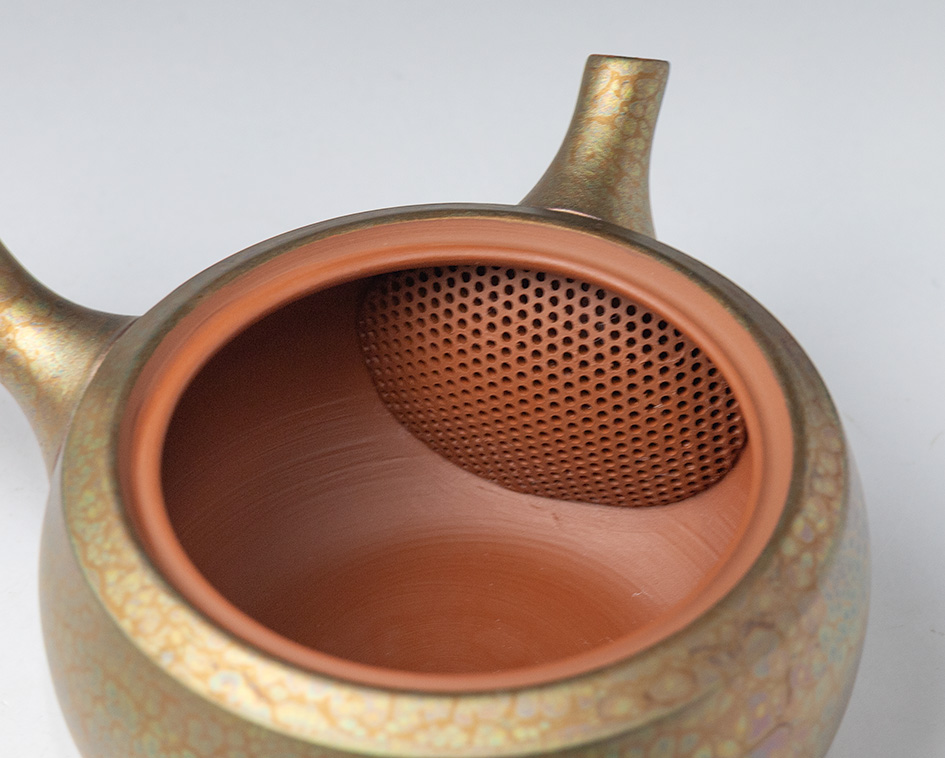
An example of a sasame ceramic filter inside a handmade Tokoname kyusu teapot.
Learn more about Tokoname ceramic mesh filter “Sasame”
Built-in ceramic mesh filters
Some Tokoname teapots have a wider built-in ceramic mesh filter, sometimes called Cera-mesh. This type is practical for many everyday Japanese green teas and allows the leaves to move freely inside the pot.
Debeso filters
Debeso filters are hand-punched half-ball shaped filters. The number and size of the holes depend on the craftsman. Some makers create hundreds of extremely small holes, requiring exceptional concentration and skill.
Direct-holes
Some handmade kyusu have a simpler direct-hole structure. These can be attractive for certain teas and for customers who prefer a very traditional construction.
How to Choose a Tokoname Kyusu
The optimum Tokoname kyusu depends on the tea you usually drink, the number of people you serve, and your personal taste in clay, firing, and form.
Capacity
There is no single correct size for a kyusu. The best capacity depends on the tea, the amount of leaf used, the number of cups served, and personal brewing style. As a general guide:
- Small kyusu, around 90-150 ml: often chosen for gyokuro, premium sencha, or more concentrated brewing.
- Medium kyusu, around 180-280 ml: a versatile range for one or two people, depending on the amount of tea served.
- Larger kyusu, around 300 ml or more: useful when serving several cups, or for customers who prefer a larger pot for everyday tea.
Clay and finish
Classic shudei clay has a refined, traditional appearance. Yakishime and wood-fired pieces may show a stronger kiln-fired character, with natural variation in color, texture, and ash effects. Mogake teapots, created using seaweed during firing, show distinctive markings on the surface.
Handle and shape
Side-handled kyusu are the most familiar form for Japanese green tea. The shape of the body, the balance of the handle, and the angle of the spout all affect how the teapot feels in use.
For more detailed advice, please see: How to Choose a Japanese Kyusu Teapot
For current stock, please see:
Tokoname Craftsmanship and Workshop Visits
Over the years, Artistic Nippon has introduced works by many Tokoname potters and teapot makers, including Hokujo, Shoryu, Gyokko, Gisui, Jozan, Konishi Yohei, Maekawa Junzo, Yamada Sou, Seiho, and others. Each potter has a different approach to clay, form, firing, and function.
Rather than maintaining separate stock pages for each artist, our currently available Tokoname kyusu teapots are listed together on our main Tokoname page. This keeps stock, prices, and sold status clear and avoids duplicate inventory information.
View current Tokoname kyusu teapots by various potters
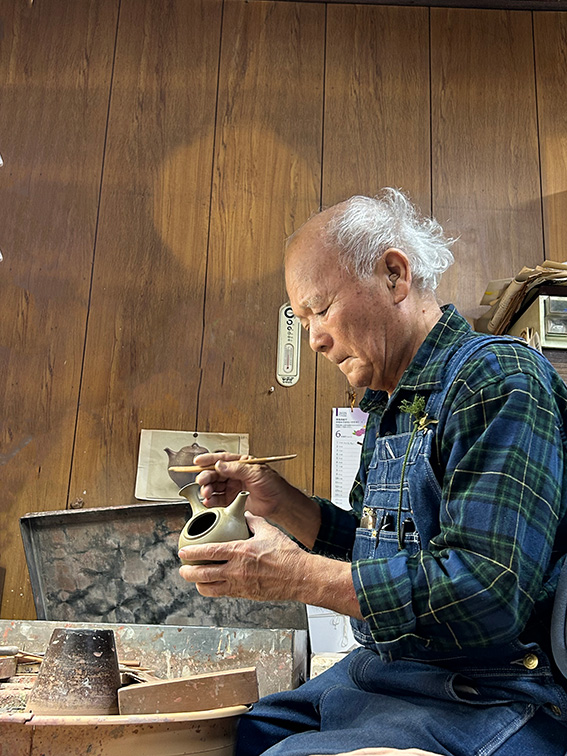
Master potter Konishi Yohei shaping a handmade Tokoname kyusu teapot in his workshop.
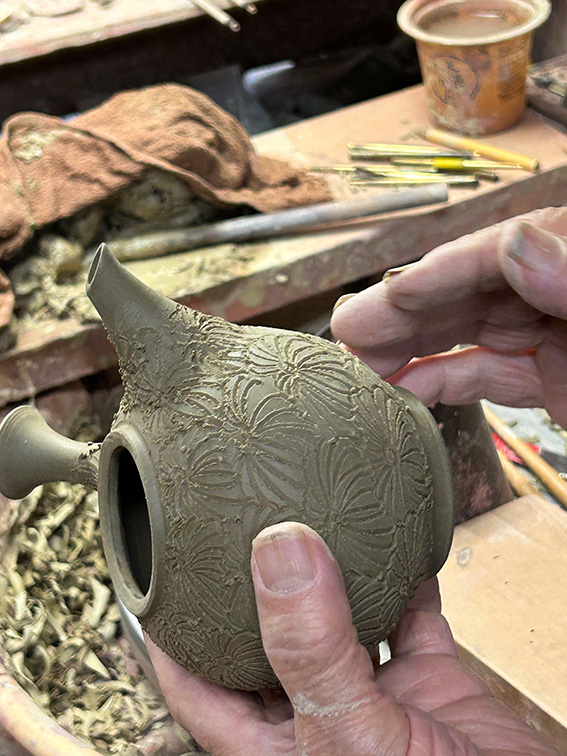
Master potter Konishi Yohei hand engraving the surface of a Tokoname kyusu teapot.
For customers interested in the making process and the people behind the work, the following pages introduce Tokoname craftsmanship and workshop visits:
Care and Use of Tokoname Teapots
Before using a new Tokoname kyusu, rinse it gently with warm water. After brewing tea, remove the leaves, rinse the inside with water, and allow the teapot to dry thoroughly with the lid off. Avoid using strong detergents inside unglazed teapots.
Because handmade teapots are individual ceramic works, please handle them carefully. Avoid sudden temperature changes, dropping, or forcing the lid. With proper care, a good Tokoname kyusu can become a long-lasting part of daily tea life.
Tokoname and Banko teapot care instructions
Related Tokoname Kyusu Guides
The following pages provide further information about Japanese teapots, Tokoname kyusu, tea preparation, and related tea utensils.
About Artistic Nippon
Artistic Nippon is operated by Yoshikawa Toki Co., a ceramics specialist established in Choshi, Chiba Prefecture, Japan in 1953. We select and ship Japanese teaware and ceramics directly from our shop in Japan to customers around the world.
Learn more about Artistic Nippon / Yoshikawa Toki Co.
Explore our current selection:
View available handmade Tokoname kyusu teapots from Japan